Dual-Use Technologies in Radiation-Hardened Electronics
In the ever-evolving landscape of electronics, radiation effects on integrated circuits remain a significant concern for both industry and the…

Researchers at the University of Alberta achieved a significant advancement in high-performance alloy design by utilizing neutron beams. These innovative alloys offer potential benefits for both defence and civilian transportation sectors.
Modern societies depend on metals that must meet greater performance demands than ever before. From electric vehicles that must travel farther on a single charge, to military vehicles expected to survive the most extreme environments, the demands placed on structural alloys are accelerating faster than traditional manufacturing can keep up. Meeting these needs requires alloys engineered from the ground up—designed not only for strength, toughness, and fatigue resistance, but also for efficient use of scarce critical minerals. For example, elements like scandium and copper are essential for high-performance alloys, but their limited availability necessitates innovative approaches to maximize their utility without compromising material properties.
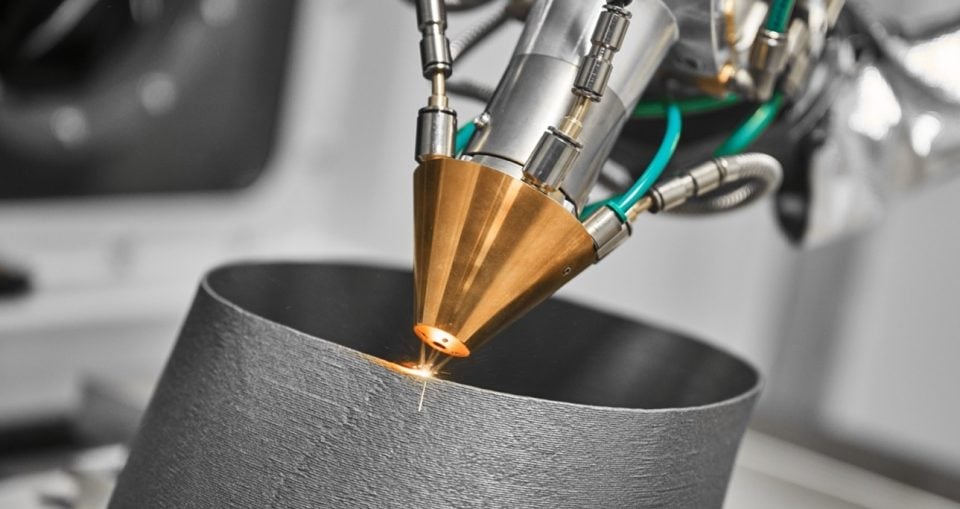
That challenge lies at the heart of Professor Henein’s research program at the University of Alberta. His work spans the full spectrum of alloy‑manufacturing processes: from slow solidification in traditional casting, to sheet production, welding and brazing, and the ultra‑rapid cooling rates encountered in additive manufacturing (AM), also known as 3D printing. Each of these processes produces distinct microstructures, and these microstructures—sometimes spaced at only sub‑micron scales—control the performance of alloys for both civilian and defence transportation.
Lack of understanding of how these microstructures form as a function of manufacturing processes has been a bottleneck in alloy development, but Henein’s group made a major breakthrough when it pioneered impulse atomization. This technique enables the production of clean, controlled, containerless metallic powders, thus opening a new pathway to study how these microstructures form under rapid solidification. Then using synchrotron experiments together with neutron scattering at the former Canadian Neutron Beam Centre (CNBC) in the 2010s, his team achieved something unprecedented: they quantitatively verified the degree of undercooling and the evolution of both primary and eutectic phases in Al–Cu powders during rapid solidification (https://dx.doi.org/10.1007/s11661-016-3594-4).
These experiments helped Henein create a microstructure map in 2019 that identifies solidification behaviour across seven orders of magnitude of cooling rate. Today, this map now forms the foundation of an Integrated Computational Materials Engineering (ICME) approach to designing alloys for strip casting, welding, die casting, spray forming, and additive manufacturing.
“Our ICME methods have already proven valuable for industry. More than $12 million has been invested in commercialization of impulse atomization for metal powder production used in 3D printing, battery materials, and other emerging technologies,” says Prof. Henein.

This legacy of neutron‑enabled insight continues to shape Henein’s design of high‑performance alloys, both high-strength steels and light-weight aluminum alloys, with expected impacts for civilian and defence applications.
For defence, high performance alloys that balance strength, hardness, and toughness with reduced weight are vital: High-strength steels are used in armoured vehicle structures, ballistic protection systems, naval hardware, and artillery components. Aluminum-based alloys—especially those strengthened with critical minerals such as scandium, copper, chromium, or silicon—are increasingly used in military jet manufacturing, where 3D‑printed structures must withstand both high loads and extreme environments. As defence systems push toward lighter and more agile designs, it is strategically important to be able to predict an alloy’s performance, as Henein’s ICME method does.
For civilian applications, Henein’s expertise is being applied to high‑strength steels for electric vehicles, which help manufacturers reduce structural weight and extend driving range. Meanwhile, his aluminum‑alloy research supports innovative aerospace components, where additive manufacturing promises reductions in waste, cost, and fuel consumption. Further, careful use and recycling of critical minerals is crucial for Canada’s economic security and environmental protection.
Given the importance of critical minerals in alloys for both defence and civilian purposes, Henein’s present work focuses on high-performance alloys that require small but essential additions of critical minerals such as Ti, Nb, Sc, Cr, Cu, or Si. These elements shape microstructure during solidification, influencing grain boundaries and precipitates. For example, in high‑strength steels, the formation of nano‑precipitates—including TiN—can be either beneficial or detrimental depending on when they form. Thus, understanding nano‑precipitates is essential for designing new high-performance alloys.
The shutdown of the CNBC in 2018 forced Henein’s research program—and many others across Canada—to look abroad for hard-to-get neutron beam time. Recently, his team secured some beam time at the Budapest Neutron Centre in Hungary where they are using small-angle neutron scattering to advance the research on high‑strength steels.
“In our experience, without a Canadian neutron facility it has been very difficult to get access to neutron diffraction beamlines and to user support needed to design experiments and train students,” says Henein. “Fortunately, this situation is starting to improve.”
Henein welcomes the development of the Canadian Neutron Beam Laboratory (CNBL) at McMaster University, which soft-launched a user program in 2025 with one high-throughput instrument, a powder neutron diffractometer. Further development of the CNBL is expected over the next several years, and with recently announced funding, it may expand to up to 6 beamlines.
Henein will use the neutron diffractometer at CNBL to analyse phase fractions in rapidly solidified, micro-segregated aluminum-alloy powders containing critical minerals. Traditional microscopy and x-ray diffraction cannot quantify these phases due to their sub-micron scale; only neutrons can reveal the full internal phase distribution needed to build accurate microstructure maps.
Through such experiments, Henein’s research continues to develop detailed microstructure maps that connect manufacturing processes to alloy performance. It exemplifies how neutron‑enabled materials research can unlock the next generation of structural alloys—for the vehicles we drive or fly, as well as the ones that protect Canada at home and abroad.