Neutrons Aid the Development of Cancer-Killing Nanoparticles
The idea of using heat to destroy cancerous tumours has been around for a long time. However, according to Johan…

A research team at the University of Saskatchewan has developed electronic circuits with record-breaking radiation tolerance, essential for both civilian and defense applications. The team utilizes a variety of radiation testing facilities, including those for protons, ions, and neutrons.
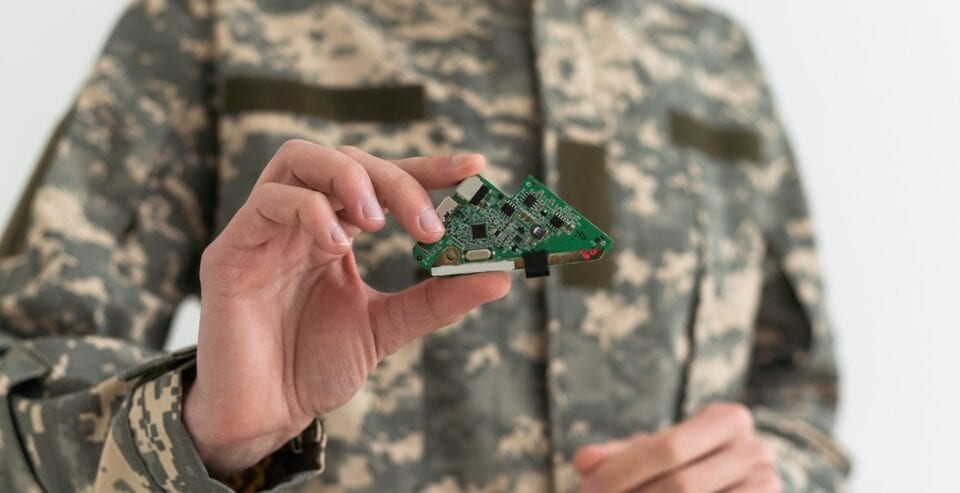
In the ever-evolving landscape of electronics, radiation effects on integrated circuits remain a significant concern for both industry and the military. Li Chen, an electrical and computer engineering professor at the University of Saskatchewan, leads pioneering research in radiation effects and mitigation techniques. Radiation-hardened electronics are crucial for space missions, nuclear power plants, and the automotive industry, particularly with the rise of self-driving vehicles.
The dual-use nature of radiation-hardened electronics is evident in their potential for defense applications. Military satellites operate in elevated radiation fields, and aircraft and ground-based vehicles may also operate in areas with high radiation levels, such as near compromised nuclear facilities or conflict zones. Knowledge generated from testing circuits for radiation tolerance can significantly impact defense procurement decisions.
While much attention is given to protons and heavy ions in space environments, neutrons play a critical role at ground level. As Professor Chen explains, when charged particles traverse the atmosphere, they lose energy and generate secondary particles—most notably neutrons. These neutrons are the dominant radiation type reaching ground level, making them especially relevant for commercial and military electronics operating in the low atmosphere or on the ground.
Although protons and heavy ions are a great concern in space applications, neutrons dominate ground-level radiation because they are generated when such incoming charged particles interact with the atmosphere. These neutrons significantly affect electronics at or near Earth’s surface.
For example, Cisco—a key industry partner of Chen’s—operates numerous ground-level network servers that are vulnerable to single event effects resulting from neutron interactions. To tackle these challenges, Professor Li Chen’s team has conducted neutron testing at the ISIS Neutron Source in the United Kingdom. Their work correlates the impact of neutron radiation on server electronics with real-world device performance, providing valuable insights for improving network reliability.
Professor Chen’s research integrates both lab-scale methods, such as pulsed laser fault injection, and national-scale radiation beam facilities to rigorously test electronic circuits. Leveraging state-of-the-art fabrication technologies ranging from 7nm to 130nm, his team designs electronics that are robust against radiation. Their innovations—including radiation-hardened flip-flops and microcontrollers—are specifically engineered to resist single event effects as well as cumulative total dose impacts, ensuring dependable performance even in extremely harsh environments.
Chen has recently published findings demonstrating that one of his microcontrollers, built on the RISC-V architecture and utilizing primarily open-source components, achieves exceptional radiation tolerance. This device has been likened to an electronic “bullet-proof vest” due to its ability to withstand extremely harsh environments. To date, no other comparable microcontroller has been shown to offer a similar level of radiation resistance.
Some of Professor Chen’s research outcomes are commercialized through intellectual property held by his research partners. At the same time, his team has preserved certain critical proprietary know-how, and they are exploring pathways to directly commercialize these innovations themselves.
MDA Space is a key research partner, underscoring the strategic significance of radiation-hardened electronics for both industrial and defence applications. As a leading supplier to the Canadian military, MDA provides sensors, communications equipment, and a range of electronic systems used in aircraft, ships, and land-based installations. Their commercial interests align closely with the need for resilient technologies capable of operating reliably in challenging environments.
By systematically addressing the challenges posed by radiation—from protons and ions to neutrons—and engineering resilient, dual-use electronic systems, Chen’s team is advancing technologies that safeguard both civilian infrastructure and military assets. Their work exemplifies how research using radiation-testing facilities, including neutron beam facilities, can drive innovation for both industry and national security.