Solving the Mystery Flask: A Forensic Challenge
“The knowledge gained enabled CNL to (1) properly record the capsules’ contents in the nuclear materials inventory, (2) determine how…

Research with neutron beams has the potential to transform how energy absorbing materials are designed, validated, and deployed for both military armour and civilian infrastructure.
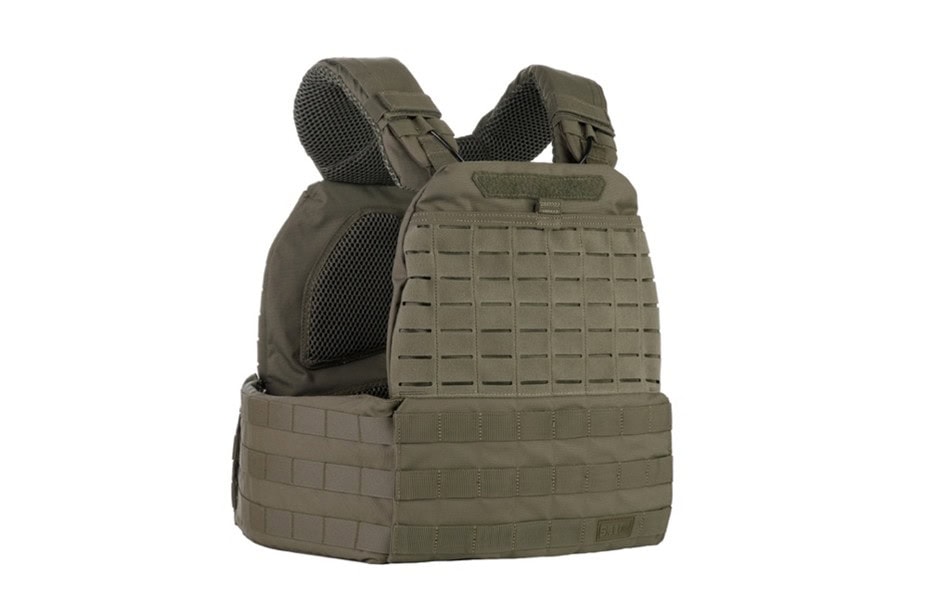
Canada faces growing demands to protect military personnel and vehicles in an increasingly unstable world, to ensure the reliability of satellite and space technologies that support communications and navigation, and to improve the safety of transportation infrastructure.
Across all of these domains, performance increasingly depends on how materials respond to extreme, short‑duration energy loads within complex internal structures. For instance, when a projectile strikes armour, or when a vehicle collides at high speed, the critical question is not simply whether the material survives the event—but how it absorbs and dissipates an enormous burst of energy. Materials that can collapse in controlled ways, redirect forces, and limit the transmission of shock are central to protecting lives, whether on the battlefield or in everyday civilian environments.
A new wave of research into energy‑absorbing materials—especially those generated by additive manufacturing—is opening the door to entirely new design strategies. Enabling these advances, neutron beams are powerful probes that reveal the internal mechanics that determine whether such materials succeed or fail.
A design challenge defined by extreme conditions Energy‑absorbing materials used in ballistic protection, vehicle armour, and crash mitigation systems are deliberately engineered to deform. Rather than resisting impact purely through strength, many of these materials absorb energy through carefully designed internal collapse mechanisms.

“These are materials that essentially sacrifice themselves,” explains Abdallah Elsayed, a professor at the University of Guelph, whose work focuses on advanced materials. “They’re designed to collapse on themselves in a predictable way to absorb as much energy as possible.”
Such materials are valuable for personnel and vehicle armour, but their relevance extends well beyond military applications. Similar concepts underpin energy‑absorbing roadside infrastructure such as crash barriers and impact attenuators, as well as materials used to protect high‑value payloads in aerospace and space systems, where components must survive extreme shock without adding excessive mass.
Achieving reliable and predictable energy absorption, however, requires a deep understanding of how complex internal structures respond when subjected to extreme, short‑duration loads.
Additive manufacturing enables new designs, yet complicates the understanding of materials
Additive manufacturing, or 3D printing, is increasingly attractive for defence and safety applications because it allows engineers to create complex internal architectures and to tailor components that may only be produced in small quantities.
But this design flexibility comes with a major challenge.
“Additively manufactured materials are a mess to characterize,” says Levente Balogh, a professor at Queen’s University. “Small changes in printing parameters, thermal histories, or build orientation can lead to large variations in microstructure and residual stress.”
For energy‑absorbing materials, these variations matter. They influence where deformation begins, how stresses redistribute during an impact event, and how consistently a material performs from one component to the next.
Understanding shocked materials: from cause to consequence
When an energy‑absorbing material undergoes a ballistic or high‑velocity impact, it enters what materials scientists call a shocked state, marked by residual stresses and local deformations, which can manifest as dislocations, cracks, twinning, and phase changes—all created as a result of absorbing energy.
To go beyond trial-and-error design, researchers need microstructural and residual-stress data in both the as-printed state, and in the shocked state.
“We can use models to try to predict what happens to these materials under impact, but the models rely on assumptions that can only be validated through material characterization with neutrons, x-rays, and other tools.” says Balogh. “The key is to examine both the starting microstructure and the shocked state, then link those observations together.”
Why neutron beams are uniquely valuable
Neutron beams offer capabilities that are difficult, or impossible, to replicate with other experimental techniques.
Neutron diffraction enables non‑destructive measurement of internal stresses, phase changes, and deformation mechanisms deep inside dense materials. This capability is particularly important for understanding how stress develops during additive manufacturing and how it redistributes after a high‑rate impact event.
Neutron imaging complements this knowledge by revealing the three‑dimensional internal structure of energy‑absorbing materials over large length scales. Designed void networks, lattice collapse patterns, and internal damage pathways can be visualized without cutting the component apart.
“Neutron imaging would allow us to see the internal features across the whole structure,” says Elsayed. “Things like voids and collapse mechanisms that are central to how these materials behave under impact.”
When combined with x‑ray techniques, microscopy, and modeling, neutron‑based measurements provide the experimental foundation needed to validate assumptions and improve predictive confidence.
Looking ahead
“Additive manufacturing of energy-absorbing materials is a growing field for defence research,” concludes Elsayed. “Progress in this field depends on experimental tools that can reveal what happens inside materials—before, during, and after they absorb energy.”
Neutron beams offer precisely that capability, helping to close the gap between material design and real‑world performance. Neutron‑based research provides a shared scientific foundation for improving protection systems for military personnel and vehicles, while simultaneously enhancing the safety and reliability of Canada’s critical civilian and space infrastructure.